No kitchen at suppertime.
In the opening trail passage, the narration names cold suppers, hunger and nowhere comfortable to rest. Begin by noticing the situation, rather than judging the worker.
THE STORY / HARD WORK BEFORE SUNDOWN
The important change isn’t that the workers try harder.
It’s that someone notices what they need.
A STORY TO LISTEN TO
The publisher’s narration introduces tired, hungry trail workers far from a kitchen or a comfortable place to rest. They have already been working all day. More effort would not make a warm supper appear.
In the telling, Charles Goodnight responds with a practical idea: fit a sturdy wagon with drawers, shelves, a fold-down table, provisions and a cook. The kitchen can now travel with the workers.
This companion looks at that act of support. It is not an independent historical account, a transcript or an illustrated edition.
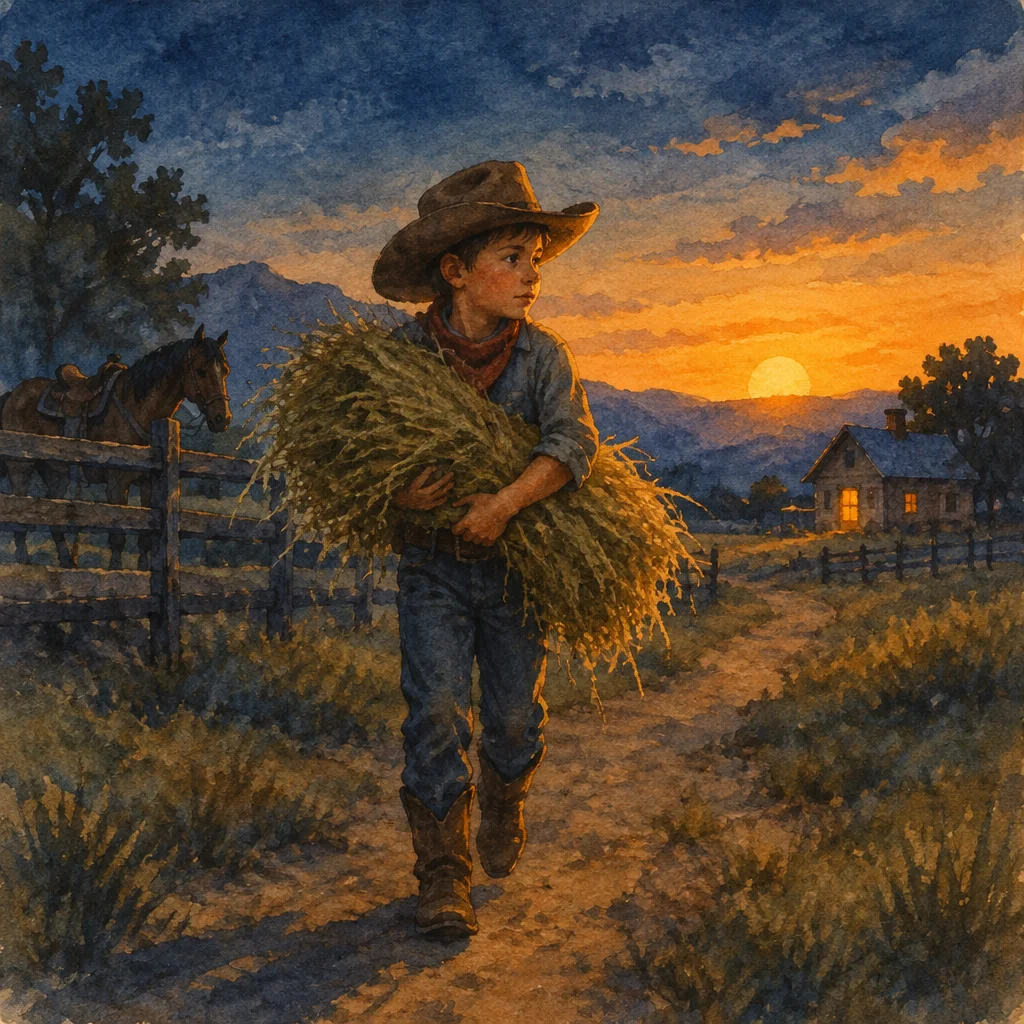
The child, hay and horse in the publisher’s promotional art set a mood. They do not verify an event in the narration. No chuckwagon appears in this image.
THREE PRECISE NARRATIVE MOMENTS
In the opening trail passage, the narration names cold suppers, hunger and nowhere comfortable to rest. Begin by noticing the situation, rather than judging the worker.
The wagon’s kitchen changes what is available. A cook and provisions are part of the support, too; care is not another job assigned to the tired person.
After the kitchen arrives, the narration describes supper, stories, soft songs and a sky full of stars. The workday gives way to another kind of time.
These are paraphrases of narrative moments, not page references or independently verified historical claims.
SOURCE WORDING & EDITORIAL CARE
“A rolling kitchen, on wheels!”
Exact excerpt from the publisher’s narration,
Hard Work Before Sundown.
The narration also describes rest as earned through hard work. We do not rewrite that source language or turn it into a condition children must meet.
Our original guidance makes a separate promise: meals, sleep, affection and basic care remain available whether a task is finished, unfinished or not started. The practical idea we carry into ordinary life is to make support easier to receive.
Find words for your own eveningNOTHING MORE TO FINISH HERE
A task can wait. A warm meal, a helping hand and a place to rest don’t have to.
Listen on Sloan’s BedtimeThe full audio lives with the publisher. Turn the screen away when you’re ready.